Some Finds by Her recommendations use affiliate links. If you buy through one, we may earn a commission at no extra cost to you.
You put your hair away for weeks, barely touched it, and somehow the takedown still ends with broken pieces everywhere. That's the frustrating part about protective styles: putting your hair away doesn't automatically mean you're protecting it. How the style is installed, maintained, and removed matters just as much as the style itself.
If it hurts, that's not a good sign.
A fresh style doesn't need to leave your scalp throbbing to be neat. Excessive pulling—especially around the hairline—can put unnecessary stress on your strands and scalp. If you're getting headaches, bumps, extreme tenderness, or your edges look visibly pulled, don't treat the discomfort like proof that your style was installed well.
Your edges shouldn't be doing all the work.
The hair around your temples and hairline can be more vulnerable to repeated tension. Tiny, tight braids and heavy extensions can make that worse. A protective style should protect the delicate parts too—not sacrifice them for a cleaner-looking install.
Then there's the opposite problem: forgetting your hair exists.
Low manipulation doesn't mean no maintenance. Your scalp can still collect sweat, oil, dead skin, and styling-product residue while your hair is braided or twisted. And depending on your style and hair needs, the hair underneath may still benefit from thoughtful cleansing and moisture.
It's tempting to stretch a style because you paid for it and it still looks decent. But as your hair grows, sheds, tangles, and collects buildup, keeping the style indefinitely can make takedown harder. There's no universal expiration date for every protective style, but “it still looks cute” shouldn't be your only reason for keeping it in.
The takedown can undo weeks of being careful.
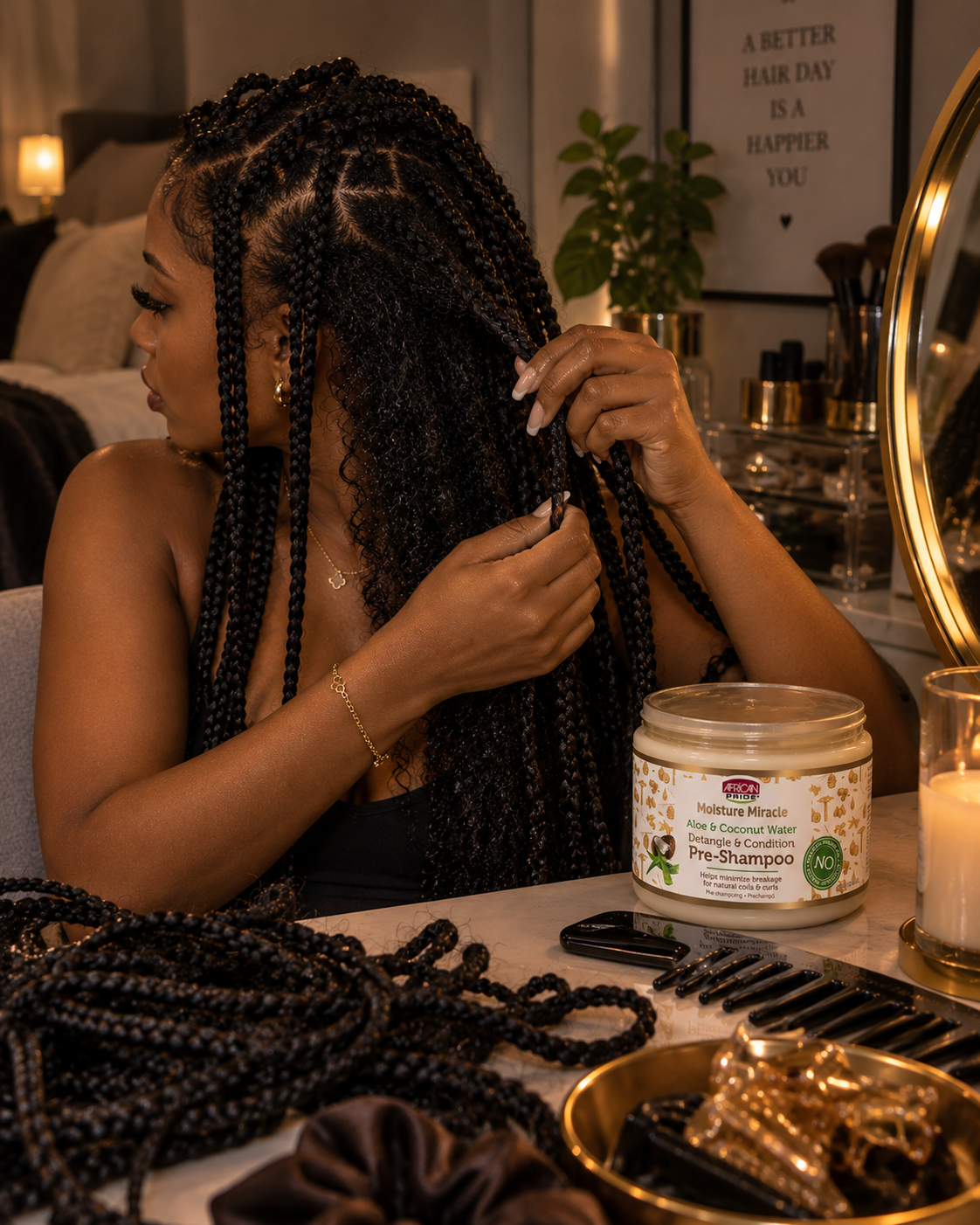
This is where patience matters. Ripping through knots, separating tangled roots too aggressively, or combing through dry hair can create breakage that gets blamed on the style itself. Take your time, work in sections, and give tangled areas enough slip to separate without fighting them.
And all that hair in your hands isn't necessarily breakage.
Hair naturally sheds over time. When your hair has been tucked away, many of those shed strands stay trapped inside the style until takedown day. Seeing a surprising amount of hair doesn't automatically mean something went wrong. Look at what you're seeing: full-length shed strands are different from lots of shorter snapped pieces.
Your post-style wash matters too.
After weeks in a protective style, your first instinct might be to throw every treatment you own at your hair. Start simpler. Detangle carefully, cleanse your scalp and strands thoroughly, condition, and pay attention to how your hair actually feels before deciding what else it needs.
Give your hair a second before putting it away again.
Going straight from one tight style into another can keep the same areas under repeated stress. Depending on your hair and the styles you're wearing, a little time between installs can give you a chance to cleanse thoroughly, detangle, assess your hairline, trim if needed, and notice any changes you couldn't see while the style was in.
So what actually makes a style protective?
It's less about the name of the hairstyle and more about what it's doing to your hair. Less manipulation can be helpful. Keeping your ends tucked away can be helpful. But those benefits don't cancel out excessive tension, heavy extensions, neglected buildup, or rough removal.
Pay attention to what happens after the style comes out.
If you're repeatedly noticing thinning edges, sore areas, excessive snapping, or certain sections becoming noticeably shorter after protective styles, don't ignore the pattern just because the hairstyle is supposed to be “protective.” Your hair's response matters more than the label.